
▶
01
Online Courses & MOOCs
Subtitle video lessons, recorded classes, instructor lectures and large-scale MOOCs while preserving course structure, key terminology and a comfortable learning pace.
Make online courses, corporate training and educational videos accessible to learners worldwide with accurate, professionally localized subtitles. Textsprime combines AI-assisted transcription and timing with human translation, terminology review and final QA to deliver clear, learner-friendly multilingual subtitles in LMS-ready formats.
We will reply within 15 minutes.
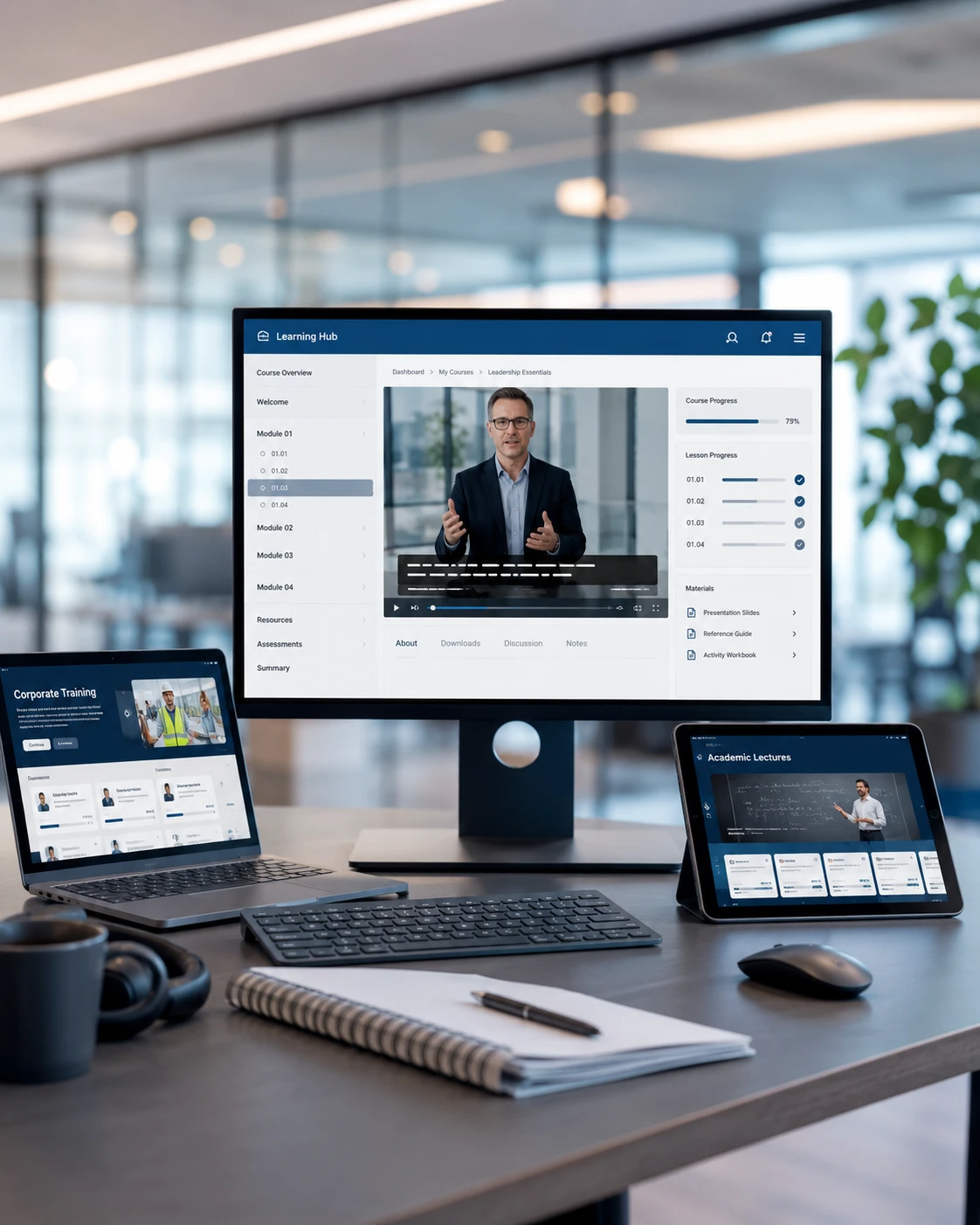
Clear timing, consistent terminology and educational context help learners follow course content without unnecessary reading friction.
Subtitle video lessons, recorded classes, instructor lectures and large-scale MOOCs while preserving course structure, key terminology and a comfortable learning pace.
Support employee onboarding, product training, software tutorials and internal learning programs with consistent terminology, multilingual delivery and controlled course versions.
Localize lectures, webinars, tutorials, academic presentations and research videos with careful attention to subject terminology, instructor meaning and visual learning references.
Prepare subtitles for compliance, safety, HR onboarding and regulatory training where terminology accuracy, subject awareness and thorough human review are especially important.
Textsprime localizes subtitles within the context of the complete learning experience. Language is adapted with attention to the learner, subject matter, instructional tone and regional expectations rather than translated word for word.
Subtitle language can be adjusted for cultural context, regional preferences, learner expectations and natural instructional expression while keeping the original lesson intent clear.
Course terminology, subject-specific vocabulary, product terms and approved expressions can be managed through glossaries, terminology resources and previously approved translations.
Translation memory, style preferences and version-aware workflows help maintain consistency across course series, global training programs and revised learning content.
Spoken course content is prepared as a reliable source transcript before subtitle production begins, with attention to instructor speech, speakers, lesson references and course-specific terminology.
Linguists translate course subtitles with the teaching context in mind, preserving meaning, technical concepts and natural learner-facing language within the limited space available on screen.
Subtitle timing and sentence breaks are adjusted around the pace of each lesson so learners have enough time to read key information without subtitles becoming a distraction.
Course terminology and subtitle files are checked for language consistency and technical accuracy, particularly for specialized training where small errors can affect learner understanding.
Specialized course content needs additional attention.Terminology-focused workflows can support engineering courses, medical training, software tutorials and professional certification programs.
Delivery requirements vary between web-based courses, corporate LMS environments and university learning systems. We prepare subtitle outputs based on the actual platform and publishing workflow rather than assuming one format works everywhere.
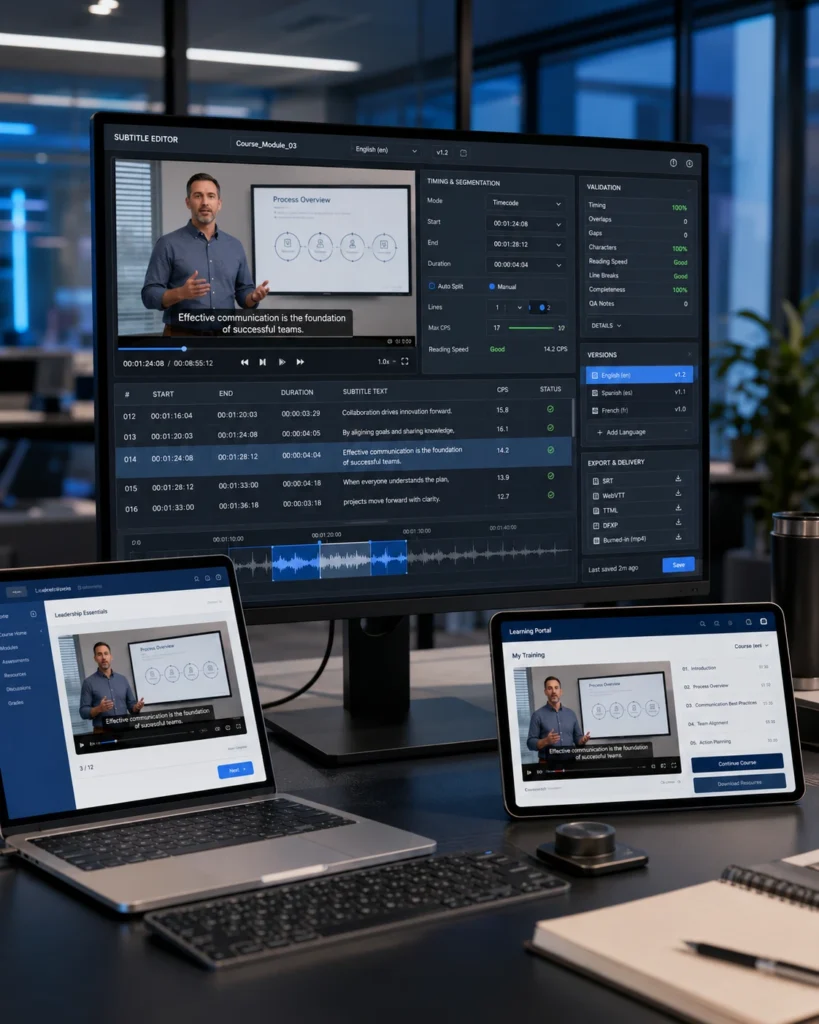
Subtitle duration, sentence segmentation, line breaks and synchronization are adjusted to help learners read without losing track of the lesson.
Clear naming, language identification and version tracking help keep multilingual modules aligned when courses are revised or updated.
Final subtitle files are checked against agreed platform requirements, including file compatibility, timestamps, missing text and display issues.
SDH can include speaker identification, meaningful sound descriptions and other important audio information when required.
Subtitles primarily represent or translate spoken course content, helping learners understand videos delivered in another language.
Captions can include spoken dialogue together with speaker identification and relevant sound information needed to understand the learning content.
Transcripts provide searchable and reusable text that can support course reference materials, review, note-taking and learning resources.
Caption files can be reviewed against the accessibility requirements agreed for the project, with attention to completeness, timing, readability and meaningful audio information.
The right format depends on the learning objective.Subtitles, captions, SDH and transcripts serve different purposes, so delivery is defined according to the audience, course environment and project requirements.
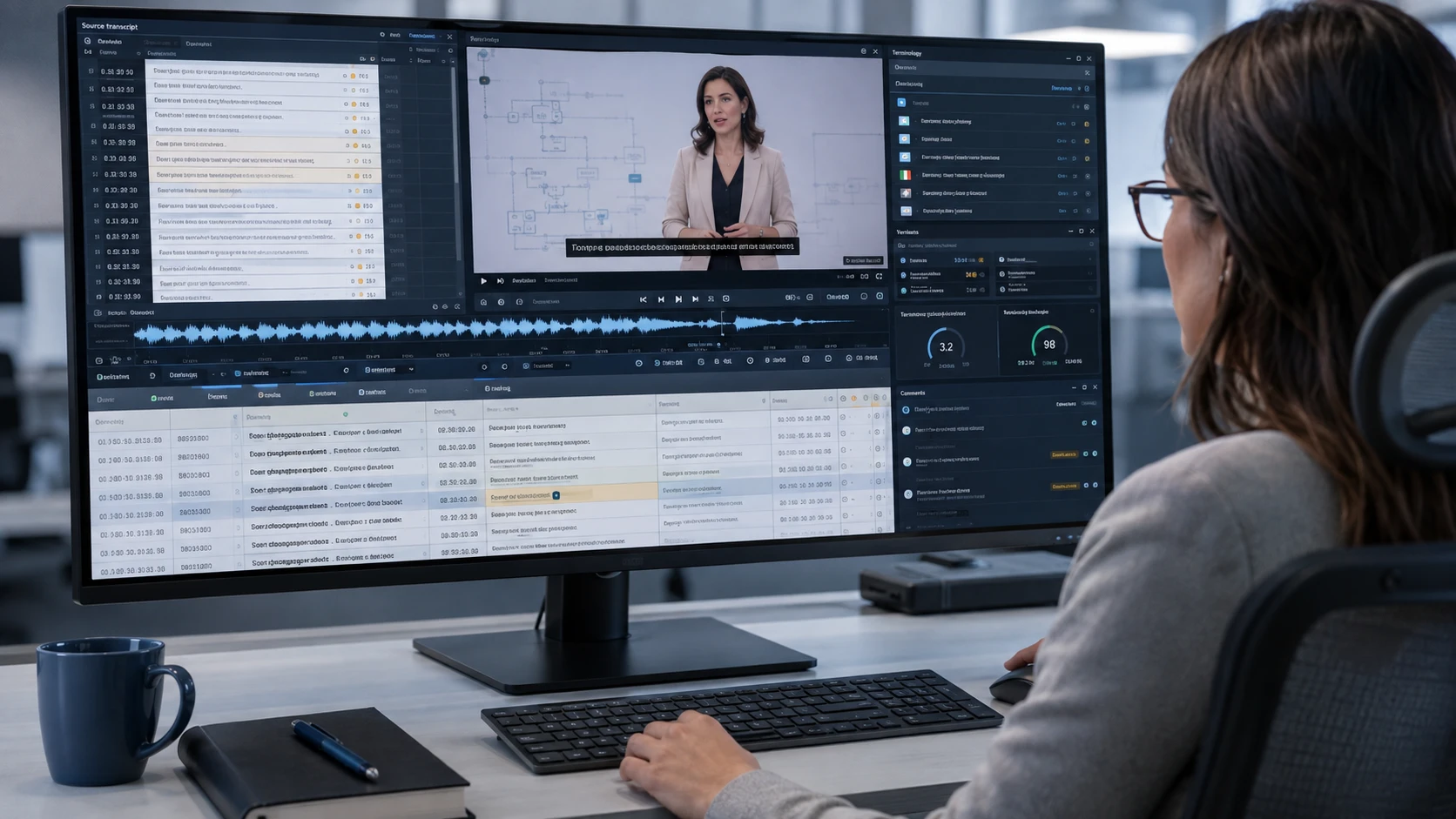
Course videos, lesson structure, source and target languages, learner audience, terminology resources, subtitle type, formats and LMS requirements are reviewed before production begins.
Speech recognition can assist with transcript generation, speaker identification and source preparation before human review of course terminology, chapter references and key concepts.
Linguists adapt subtitles for learner understanding while preserving instructional meaning, technical concepts, approved terminology and natural target-language expression.
AI-assisted initial timecodes can speed production, while editors refine subtitle duration, sentence segmentation and reading speed around the actual pace of the lesson.
Review covers accuracy, terminology, grammar and style together with subtitle timing, formatting, display quality, completeness and file validation.
Final subtitle files can be previewed, updated after agreed feedback and delivered as organized multilingual packages in the required course-platform formats.
Standardized project workflows, documented QA procedures and continuous improvement practices support consistent delivery across individual courses and larger multilingual learning programs.
Translation workflows incorporate qualified linguists, terminology management, review stages and quality-control steps for multilingual eLearning and specialized training content.
Internal courses, proprietary training videos and confidential educational materials can be managed through controlled access, secure transfer and defined confidentiality procedures.
Medical training videos, healthcare education and medical-device learning content can require tighter terminology control, documented review, subject-matter expertise and confidential handling.
eLearning subtitles are reviewed not only as translated text, but also as instructional content that learners need to read, understand and use.
Reviews translation accuracy and language consistency across course subtitles.
Checks whether the subtitle preserves instructional meaning and remains clear for the intended learner.
Confirms the subtitle file functions correctly from timing through final delivery.
Reviews captions and SDH elements according to the accessibility requirements agreed for the project.
Educational subtitles need to communicate concepts clearly, remain readable on screen and stay consistent across lessons, languages and course updates. Our workflows combine language specialists, subject-matter expertise and structured human review.

Resources can be selected according to the course subject, audience and language requirements, helping preserve both linguistic accuracy and instructional clarity.
Human reviewers check terminology, educational meaning, readability and final subtitle quality rather than relying on automated output as the final course deliverable.
Support can extend from a single course to multi-module training programs, multiple languages, global rollouts and recurring course updates.
Specialized workflows can support medical, technical, compliance, engineering, finance and software training where accurate concepts and industry terminology matter.
Pricing reflects the actual production work required for the course rather than a single fixed rate. The main factors include:
Delivery schedules are planned around the size and complexity of the learning program, especially when multiple languages or review stages need to move in parallel.
Course modules or language groups can be scheduled in agreed phases when a complete learning program does not need to be delivered at once.
Share the core project information so the service scope, production workflow and delivery schedule can be evaluated accurately.
eLearning subtitling can include transcription, subtitle translation, educational localization, timecoding, segmentation, terminology review, linguistic and technical QA, and preparation of LMS-ready subtitle files.
We support online courses, MOOCs, recorded lectures, webinars, tutorials, corporate training, employee onboarding, compliance courses and other educational video content.
Common delivery formats include SRT, WebVTT and TTML / DFXP, together with burned-in subtitles when required. The appropriate format depends on the LMS, video player and publishing workflow, so platform requirements are reviewed before delivery.
Yes. Multilingual workflows can support individual courses, multi-module programs and global training rollouts. Glossaries, approved terminology and version management help keep different language versions consistent as courses evolve.
Subtitles primarily represent or translate spoken content. Closed captions can also include speaker identification and relevant sound information. Transcripts provide a continuous text version that can be used as a searchable course resource or reference document.
Accessibility-oriented caption workflows can include SDH, speaker identification, relevant sound descriptions, timing checks, readability review and caption completeness according to the requirements agreed for the project.
Course glossaries, approved terminology, translation memories and subject-aware reviewers can be incorporated into the workflow. This is especially useful for technical training, software courses, medical education and certification programs.
Yes. Workflows can support medical training videos, healthcare education and medical-device learning content with terminology management, confidential handling and appropriate expert review. Applicable medical device-related projects can also use quality practices aligned with ISO 13485:2016 requirements.
Pricing depends on video duration, number of modules, source and target languages, transcription needs, terminology complexity, subtitle formats, accessibility requirements and the deadline. Course files, language requirements and LMS information help us prepare an accurate project-based quote.
Turnaround depends on course length, number of modules, target languages and required review stages. Larger multilingual programs can be planned with phased delivery and customized schedules according to the launch timeline.